By Jonathan Streeter
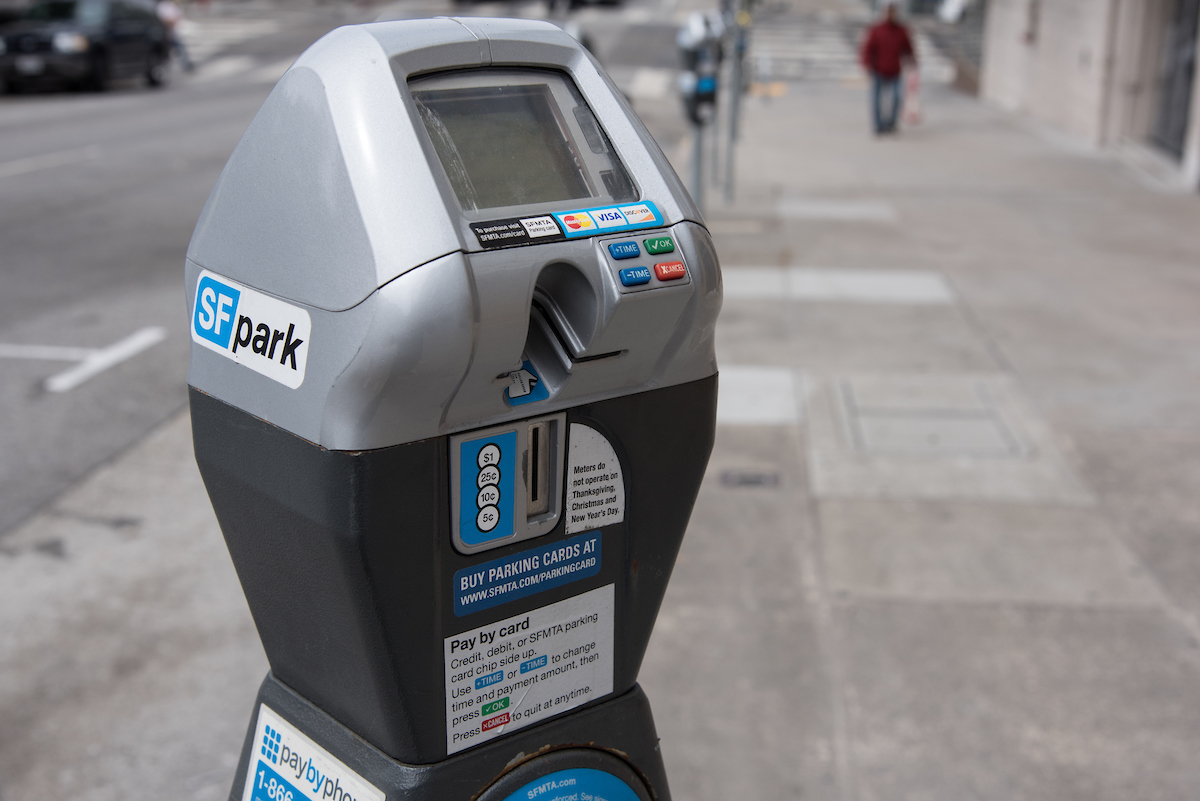
Meters help businesses and others in high demand areas of San Francisco by ensuring that people driving cars will use just the amount of time they need when temporarily parking. As such, the SFMTA recently made a simple but important update to how parking meters operate when paying for parking with a credit card.
Now, when paying by credit card, the meters will default to two hours of parking time. The previous default credit card charge was $0.25. In many areas of the city, that provides a few minutes of parking! While the new default is 120 minutes, customers may still choose the precise amount of time they want to park by using the up and down buttons on the meter. For example, if a customer wants to park for only 15 minutes, they may use the down button until the correct amount of time it is selected. Previously, a customer would have to use the up button to increase the amount of desired time.
The change to the credit card default was made for a few reasons:
• The average time cars park at meters is around an hour and a half. Most customers were required to press the “up” button repeatedly in order to get to their desired amount of parking time.
• Before this change, parking meters saw a very high number of $0.25 transactions—many of those are likely customers who didn’t realize they would only be charged for just a few minutes of parking time if they did not use the up button to increase the amount of time needed. When customers purchase the minimum amount of time without realizing it, they risk getting a ticket. By defaulting to an amount of time closer to the average time purchased, we hope to help more people avoid parking tickets for an expired meter. Under the new default, we’ve seen a significant decline in $0.25 credit card transactions.
• Customers who accidentally purchase only $0.25 worth of time often must immediately complete another transaction to purchase the amount of parking time they want. When customers make two separate transactions, the city is charged two transaction fees. Increasing the default time helps avoid double transactions and double fees.
And please note: this change applies only to credit or debit card payments: the payment procedure for cash or pay-by-phone has not changed.
For more information visit our parking meter web page.
Published February 09, 2021 at 04:26PM
https://ift.tt/2MQet3V
Comments
Post a Comment